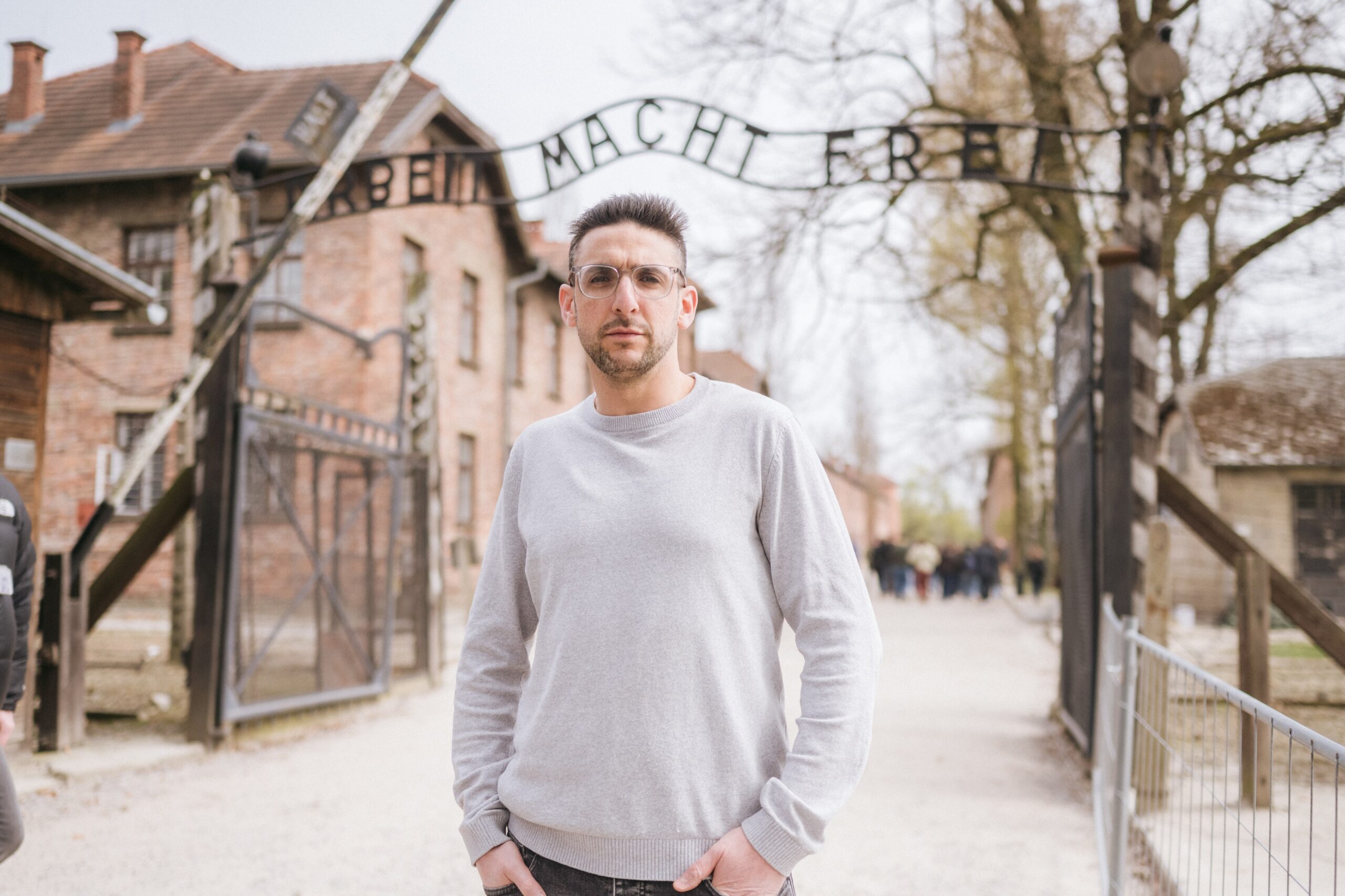
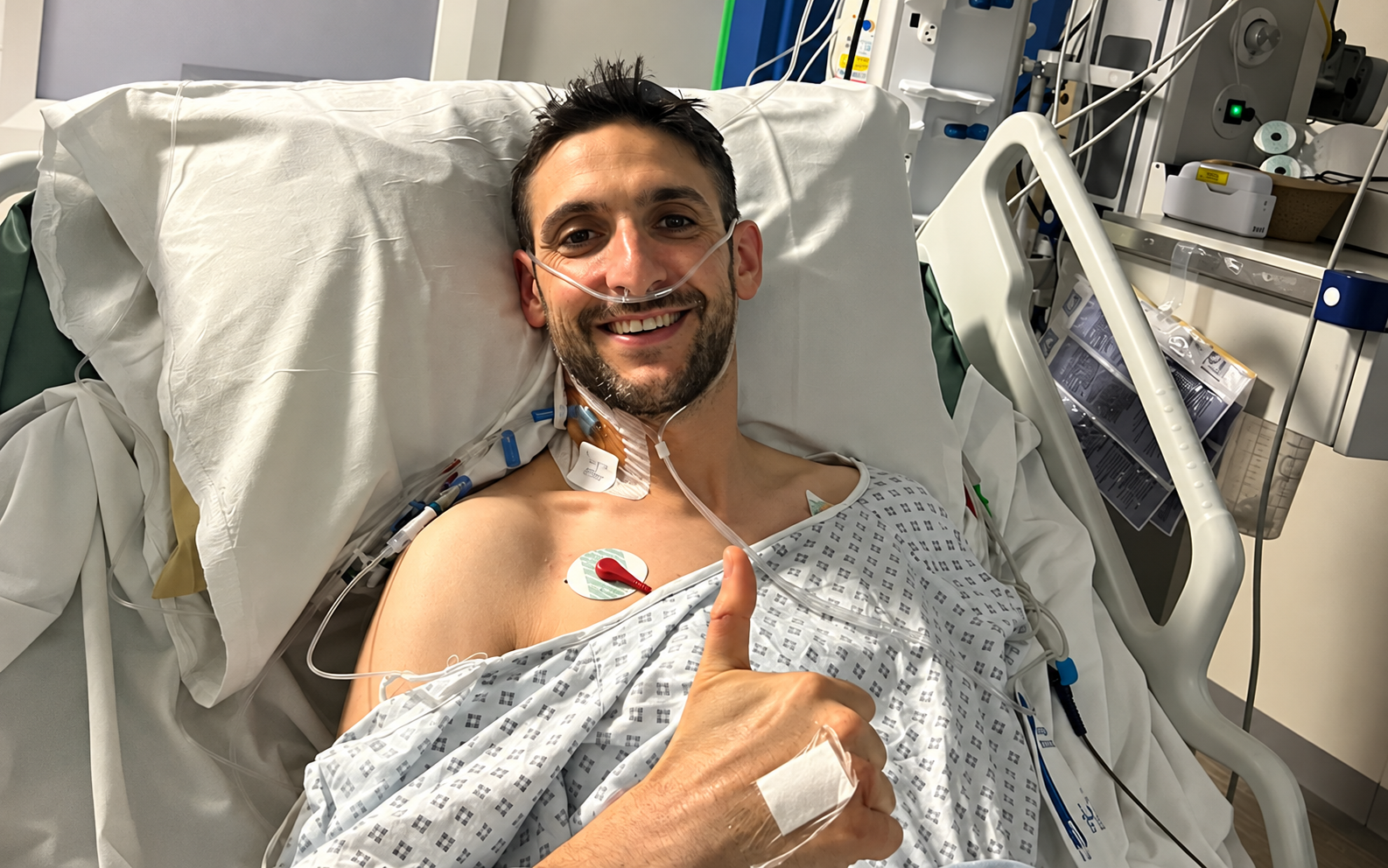
One year ago on Yom Kippur, my life changed forever. I was shot while protecting the doors of Heaton Park Synagogue in Manchester during a terrorist attack. Badly injured, I underwent seven hours of surgery and spent the next ten days in hospital. I survived. Adrian Daulby and Melvin Cravitz, two remarkable men I think about every day, tragically did not.
Since the attack, I have looked for ways to honour life and remember those we lost. So, when I was invited to join the 2026 International March of the Living, I welcomed the opportunity to march alongside Holocaust survivors and fellow survivors of antisemitic attacks. Together, we set off on the march.
As the shofar was blown, we began the 3.5 km walk from Auschwitz to Birkenau. Israeli flags were waving and 8,000 people walked with us.
They did not beat us.
The March gives you the extraordinary opportunity to spend time with survivors who rebuilt their lives and now educate the next generation. As Elie Wiesel said, “When you listen to a witness, you become a witness.”
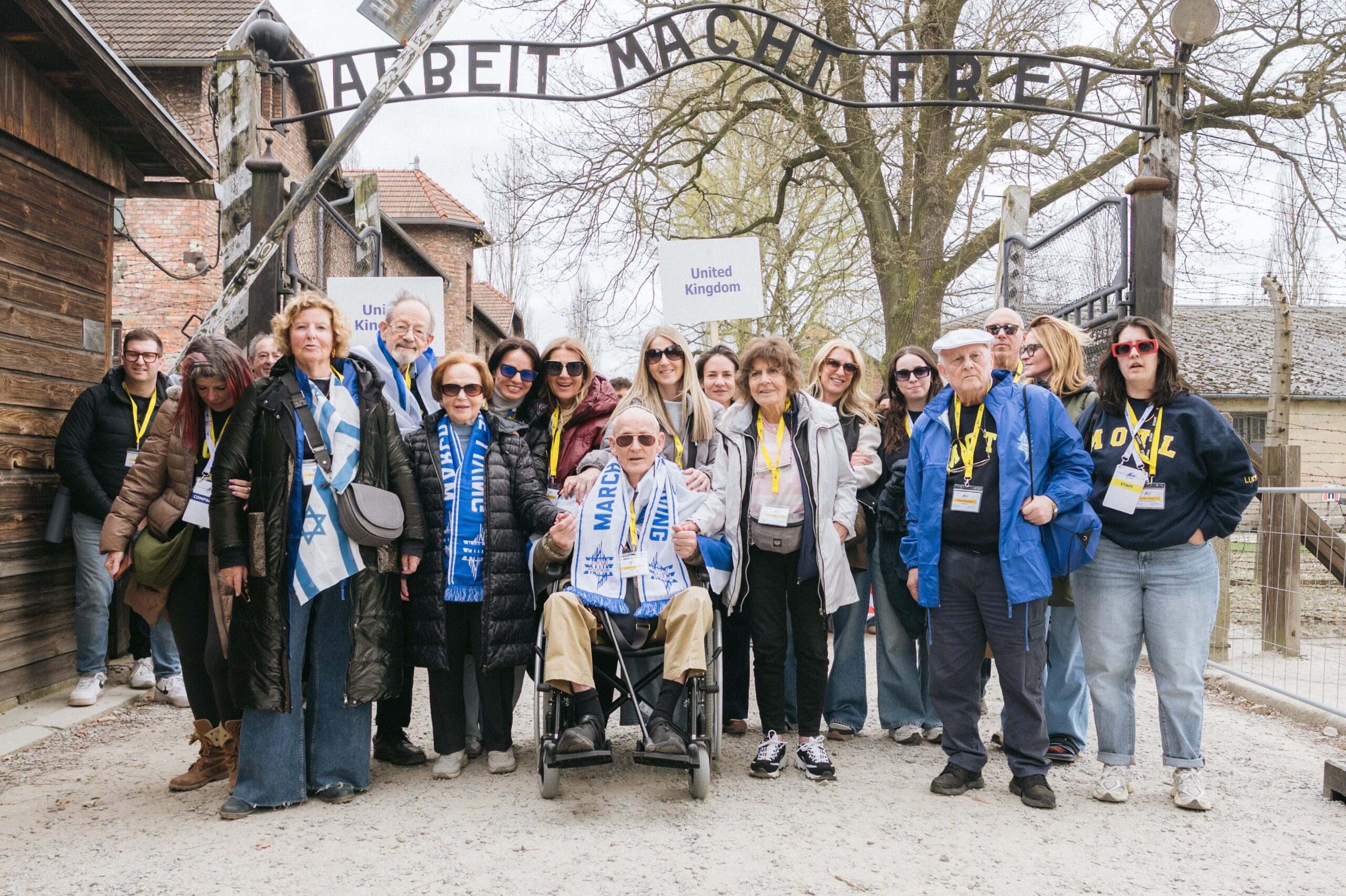
I wasn’t the only one there carrying scars of my own. I met Hannah Abesidon and Eva Wietzen, survivors of the Bondi Beach attack, and Abbie Talmud and Catherine Szkop, who witnessed the murders of their friends Sarah Milgrim and Yaron Lischinsky in Washington, D.C. We were asked whether these experiences had made us afraid to be visibly Jewish. I was wearing a kippah, Abbie a Magen David, Hannah a Chai necklace. We all gave the same answer: we were proud to be Jewish, and our pride had only been strengthened.
Together, we lit the first torch at the March’s closing ceremony in Birkenau, dedicated to combating antisemitism, alongside Sylvan Adams, President of the World Jewish Congress–Israel, and Ambassador Yehuda Kaploun, the U.S. Special Envoy to Monitor and Combat Antisemitism.
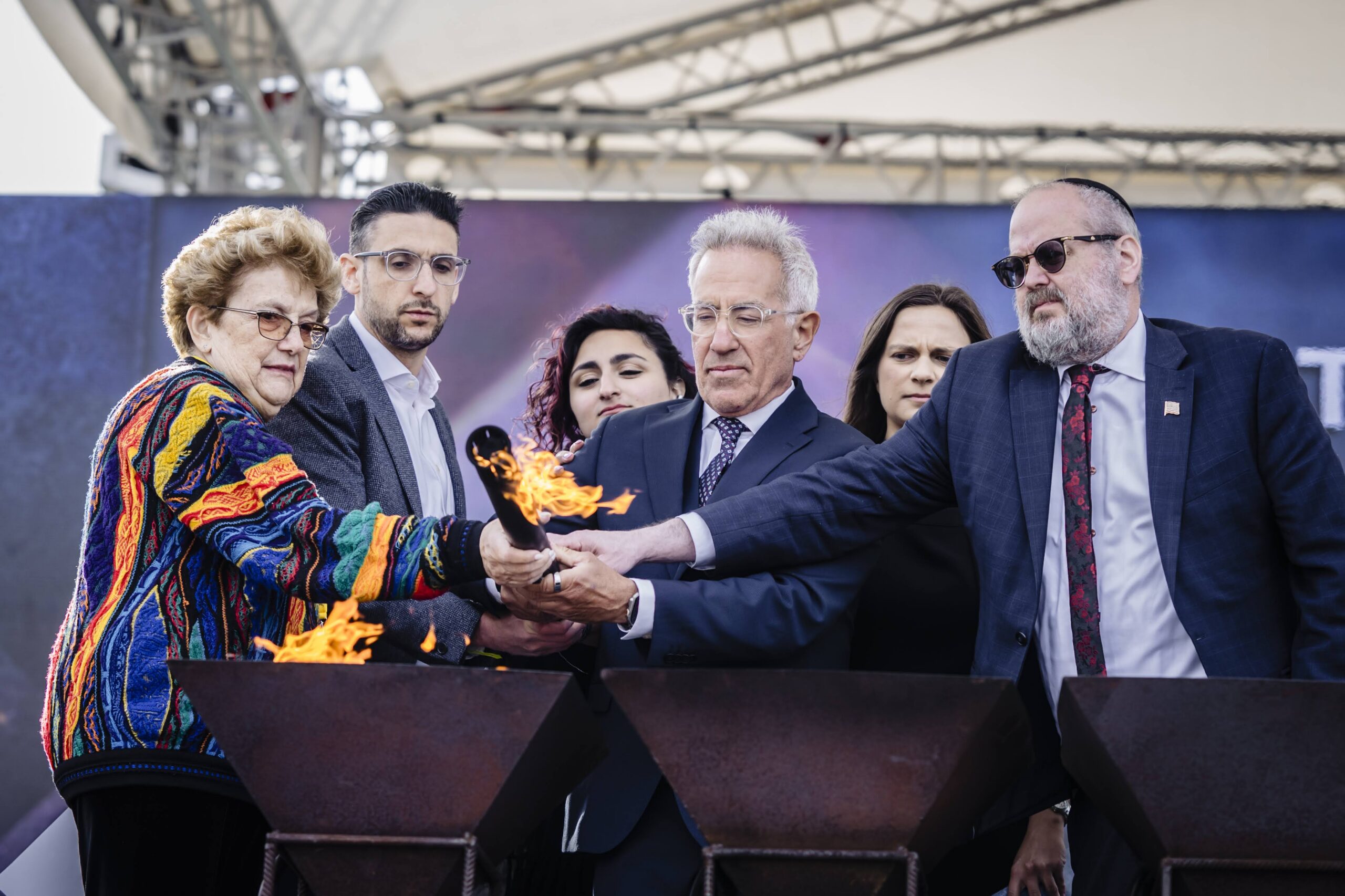
In a symbolic moment, the next torch was lit by the international law enforcement delegation, who had come to pledge their commitment to “Never Again – Not on Our Watch.” I was privileged to address the delegation, and I told them that members of my synagogue were killed and I was injured because hatred had moved from social media and marches into real life. Hate is not abstract. It has consequences, and I am living proof.
The community doesn’t feel any safer a year on from Heaton Park. There are more gates and more security than we have ever had. Any event we hold does not have the address displayed on the poster. Our kids go to schools that look like fortresses. Every Jewish building has to have security.
Combating antisemitism is not the responsibility of the Jewish community alone. As history has shown, when radicalisation or hate targets Jews first, it threatens the freedom, safety, and human rights of society as a whole. We all have a responsibility to speak up and challenge antisemitism wherever we see it.
We did not march only against antisemitism. We also marched for Jewish life and Jewish pride. In Tykocin, I experienced one of the most inspirational moments of the trip. In the synagogue there, built in 1642, we prayed Mincha, then danced, holding hands and singing V’hi She’amdah with survivors. A testament that Jewish life would not just survive but thrive.
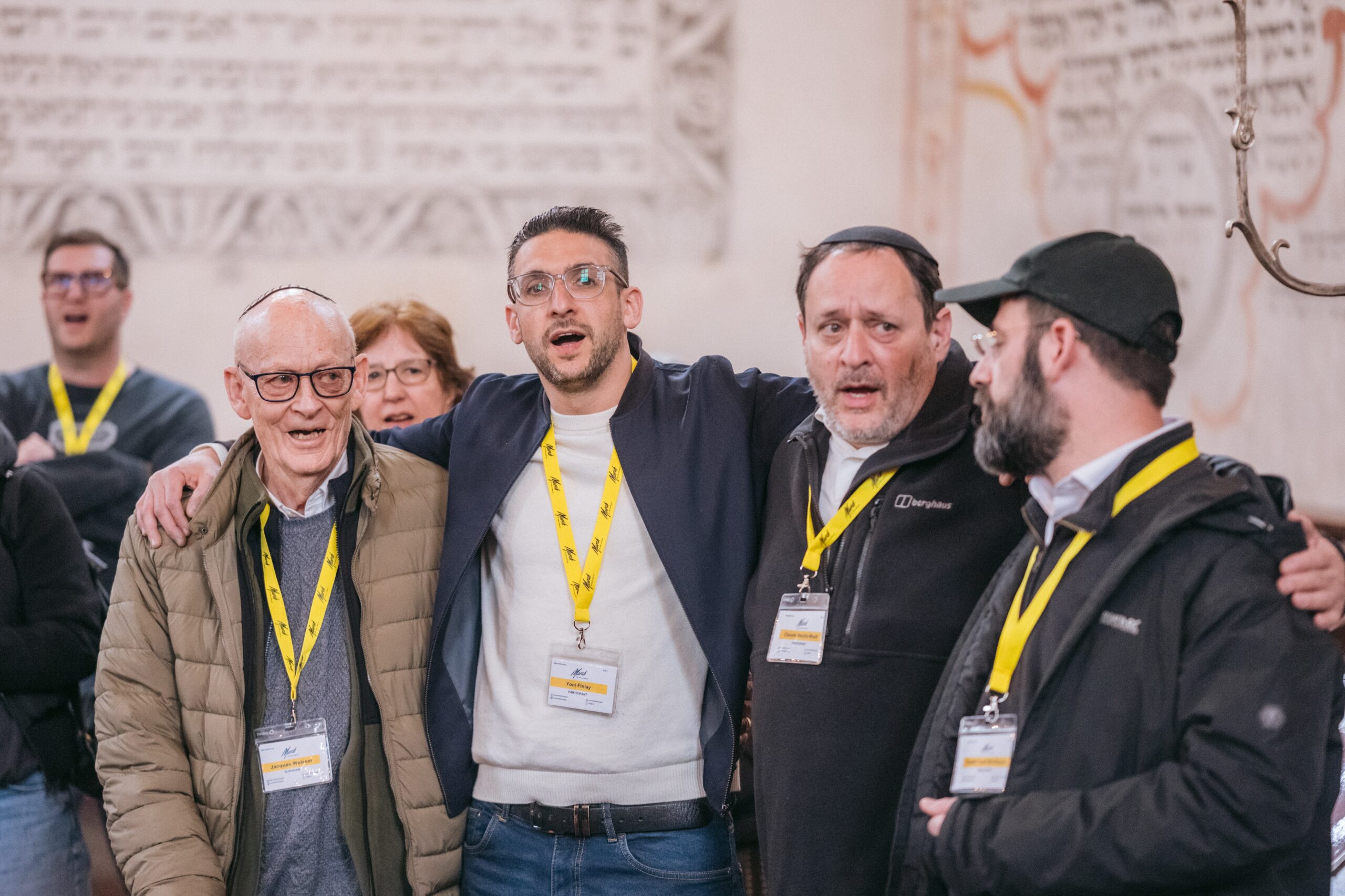
This instinct to dance rather than surrender was already familiar to me from Yom Kippur. While I was undergoing surgery, our rabbi, Daniel Walker, made the decision that we would carry on and refuse to let the terrorists win. Not a single prayer was missed. The first time I was able to return to my synagogue was Simchat Torah, where we danced like we had never danced before, with defiance. Even in the darkness and the pain, we carry on, and we dance.
As the plane lifted off from Warsaw, I made a silent promise to myself: I will be back.
I invite you to join me.
Yom Kippur will never be the same for me. But I know that, as a community, we will carry on. This Yom Kippur, we will return to our Shul. Yes, we are different, but we are still here and we are saying the same prayers that we carried on saying last year. On the March, we prayed, sang and danced in the very places where the Nazis tried to wipe us out, alongside the very people they tried to murder. And we are continuing a story that has endured in every generation, despite those who have tried to stop it.
May we all be inscribed in the Book of Life, and may the memory of all those murdered because of antisemitism be a blessing.