2023 March of the Living

Honoring Jewish heroism.

80 years after the Warsaw Ghetto Uprising, the 2023 March of the Living told the stories of the Jewish men and women who fought back in the ghettos, the death camps and the forests.

The MarchApril 18, 2023
Marking80 years since the Warsaw Ghetto Uprising
Heroes26 stories
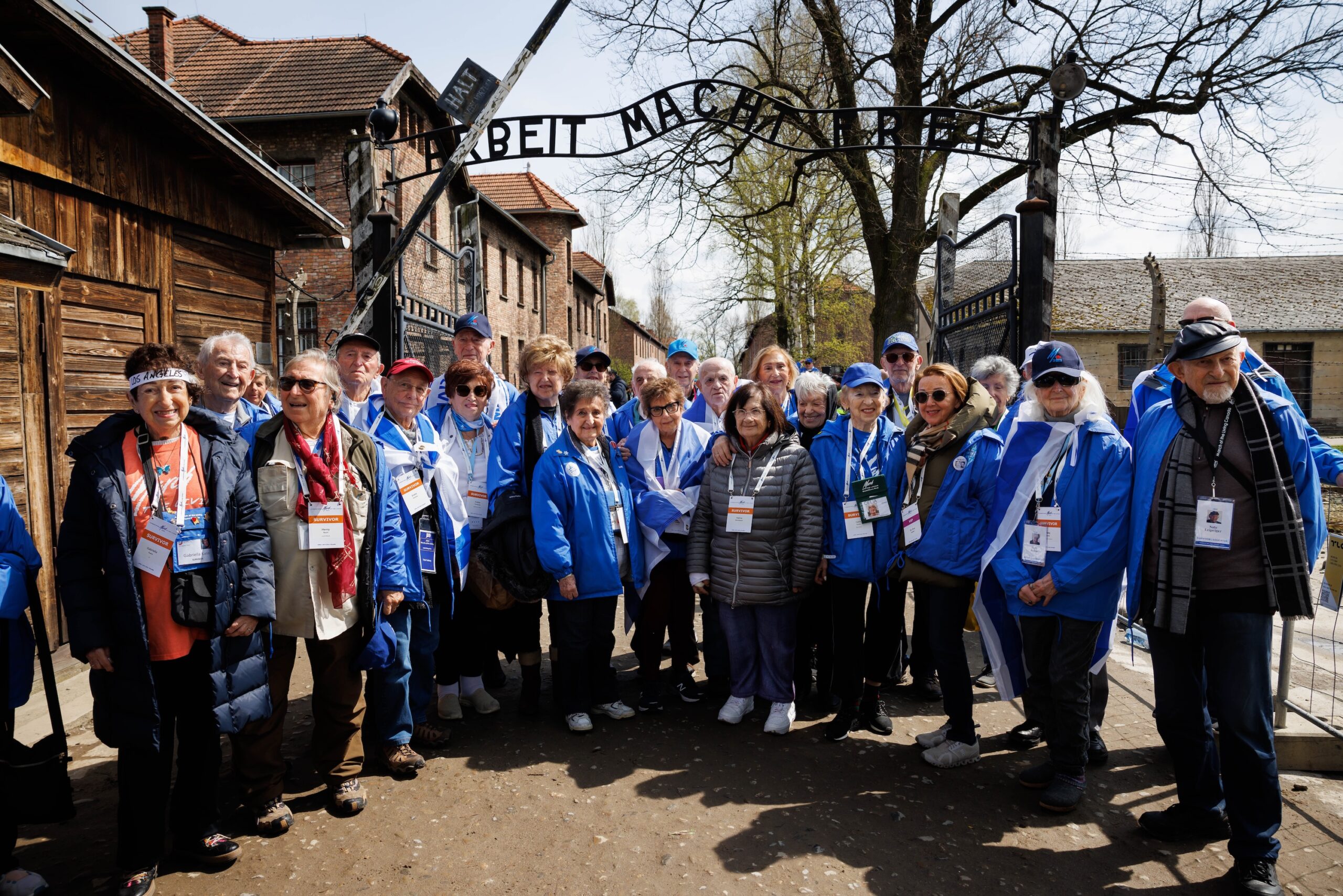
Marchers at Auschwitz-Birkenau on the 2023 March of the LivingPhoto: Ziv Koren

A heroic uprising that became a symbol of Jewish bravery during the Holocaust.

The Warsaw Ghetto Uprising inspired Jews to resist the Germans in the ghettos, death camps and forests in the Shoah. The 2023 March of the Living highlighted the stories of these brave Jewish freedom fighters.

Clips from Poland


Watch the 2023 playlist from the March.

In their own words


Thanks to AI technology developed by Israeli startup D-ID, we were able, if only for a moment, to bring the heroes of the uprisings in Warsaw and Auschwitz-Birkenau back to life. Highlighting the role of women fighters in the resistance, along with the stories of those who survived and those who perished, we present the Jewish fighters in their own words, as written during the uprising or in testimony given after it.

80 yearsThe Warsaw Ghetto Uprising
In their own wordsAbba Kovner
In their own wordsThe Women’s Courier Network
In their own wordsZalman Gradowski on the Auschwitz-Birkenau UprisingRead his account →
Portrait of Wanda Alster-Rottenberg
Jewish resistance fighter · Warsaw, 1924

Wanda Alster-Rottenberg

Wanda Alster-Rottenberg was born in Warsaw in 1924. “Bella” was her underground alias.

When the war broke out in 1939, while studying in a private Jewish high school, she joined the Poalei Zion party, following her sister Pola who was a Zionist leader before the war and who worked for JCO. Wanda was apprehended during the deportation to the Umschlagplatz - the transport station, but she was able to escape thanks to her resourcefulness and courage.

In 1942, the Jewish Combat Organization (JCO) chose her to be a messenger with the Polish underground. In addition, she was a liaison who smuggled weapons. Her beauty, appearance and excellent knowledge of Polish enabled her to act freely without concern. She left the ghetto on April 10, 1943, acting as messenger between historian Emmanuel Ringelblum and her contact on the Aryan side, Adolph Berman.

Wanda transferred documents to the archives, provided false papers and hideouts. She was also in touch with Irena Sendler, the Righteous of the Nations who hid many Jewish children during the war. Beyond that, Wanda cared for homeless Jewish children. After the war, she married Yossef Rottenberg and the two immigrated to Israel in 1950. For many years, she was an admired teacher, who was active in teaching and commemorating the Holocaust. Wanda passed away in 2008.

“Brave girls, true heroes who risk themselves daily and are expected to die.”

Emmanuel Ringelblum Archives, About Wanda

“The beautiful and tall girl, with blue eyes and two blond braids looked like a typical Pole. Her appearance and excellent Polish gave her a sense of confidence and enabled her to roam the streets of Warsaw freely.”

Eulogy
All heroes ↑
Portrait of Yeheskel Atlas
Jewish resistance fighter · Lodz, 1913

Yeheskel Atlas

Yeheskel Atlas was born in Lodz in 1913. He studied medicine in France and Italy and returned to Poland after graduating. When WWII began in 1939, he and his family fled east to the Soviet occupied zone. When the Germans invaded in the summer of 1941, a ghetto was established in Dereczyn. After he returned from one of his trips as a physician, he discovered his entire family had been murdered. Atlas decided to take revenge. In the summer of 1942, he fled to the forest with a group of youngsters where he organized a Jewish partisan unit. He concurrently established a field hospital for Jewish and Russian combatants.

His unit consisted of 120 Jewish warriors and he took on daring missions, raiding German bases, gathering weapons and ammunition, sabotaging trains, detonating bridges and more. Dozens of German soldiers were killed. His courageous operations, vengeful acts and character crowned him with a hero’s halo and everyone, Jews and non-Jews, admired him - his reputation preceded him among all partisan units in the region.

On December 5 1942, he was killed in battle in Wielka Wola. In 2006, his bones were buried in the Jewish cemetery in Zhetel in a full military ceremony. He is considered a hero in Belarus.

“In the summer of 1942, a group of Dereczyn massacre survivors happened to run into Dr. Atlas. This encounter led to one of the most amazing stories in the history of the battle against the Nazis. The most exciting event occurred two weeks after the massacre, when Atlas’ men, together with Russian partisans, attacked and conquered Dereczyn, avenging the death of their loved ones. Dr. Atlas’ company performed acts of sabotage and he himself displayed rare military talent. He worked closely with the Russian partisans main headquarters and demanded that a military man be appointed to command the company. He had very good relations with his colleagues and stood out for his modesty. His theory was simple: People must fight and avenge the death of their loved ones who could not defend themselves. Dr. Atlas was killed after 5 months of battle. His company bore his name with pride.”

Partisan Shmuel Bornstein, “Dr. Atlas’ Company”
All heroes ↑
Portrait of Tuvia Borzykowski
Jewish resistance fighter · Lodz, 1914

Tuvia Borzykowski

Tuvia Borzykowski was born in Lodz in 1914. He joined the Dror youth movement and was an active counselor. In 1938, he was a member of Freiheit - HeHalutz HaZair in his city, engaged in education and editing publications. He relocated to Warsaw in 1940 and was active at the movement’s headquarters. He joined the training farm in Cherniakov in 1942. In 1942, concurrent to the deportations to Treblinka, he returned to Warsaw, joined the Jewish Combat Organization (JCO) and took part in the battles in the ghetto. When the ghetto was burned down, he crawled to the Aryan part of Warsaw through the sewage pipes. He later returned to the ghetto and continued to fight. During the Polish Uprising in August 1944, he left the ghetto with a group of combatants through the sewage pipes and returned once again to join the Anielewicz Brigade under Antek Zuckerman’s command.

“We, the lonely warriors, alive only by chance because we were not in the bunker, came back in the evening to find our friends in a stupor. They were able to tell us of the tragedy that took place in the bunker and it was difficult to let it go. The bodies of our best friends remained under the ruins. We could not separate ourselves. That lone group, sitting on the ruins, wept without tears. The bunker was in bad condition too. We set out to 22 Francescana St., but there too, we realized it was the end. Therefore, that night, a small group of us took to the sewage pipes, seeking a path to the Aryan side.”

Tuvia Borzykowski’s ghetto journal

Following the war, he remained in Poland as an instructor for Jewish youth. He immigrated to Israel in 1949 and joined the founders of Kibbutz Lohamei HaGetaot. He was among the founders of the Ghetto Fighters’ Museum located on the Kibbutz. He passed away in 1959 and was buried at the Kibbutz Lohamei HaGetaot cemetery.

All heroes ↑
Portrait of Aharon Carmi (Chmielnick)
Jewish resistance fighter · Opoczno, 1923

Aharon Carmi (Chmielnick)

Aharon Carmi (Chmielnick) was born in Opoczno, Poland in 1923. He was a member of the Gordonia Zionist youth movement. His family, together with many of the city’s Jews, were deported to Treblinka in January 1943. Aharon jumped off the train and reached the Warsaw Ghetto, where he joined the Gordonia members of the Jewish Combat Organization (JCO). His battle began on 20 April. His unit launched grenades at a row of German soldiers. While fighting, Aharon and his comrades progressed through the bunkers.

On 28 April, after escaping through the sewage pipes, he reached the forest near Wyszkow. A group of combatants mobilized in the forest under Antek Zuckerman in the Anielewicz Brigade and took part in the Polish Uprising in August 1944. After the war, he was active in HaBericha.

“After the first shot, I felt that I did my share. They won’t take me easily. After that, what will be will be. I may be able to kill more Germans until I run out of ammunition. I kept the last bullet for me... Despair was rampant here, everyone’s nerves were bare, every sound generated fear. We had only a few grenades left. What should we do now?”

His testimony and book, From That Fire, co-authored with Chaim Frimer

He immigrated to Israel in 1945, joined the Haganah and was among the first to enlist in the Artillery Corps. He built a family with Miriam, a Holocaust survivor. He passed away in 2011 and was buried in the Tel Mond cemetery.

All heroes ↑
Portrait of Shalom Cholavsky
Jewish resistance fighter · Lida, 1914

Shalom Cholavsky

Shalom Cholavsky was born in Lida, Belarus in 1914. He studied teaching in Hebrew and ran the “Tarbut” school. When WWII broke out and the Soviets conquered the area, he was among the first to join the underground and among the leaders of the Nieswiez Ghetto Uprising. It was the war’s first Jewish ghetto rebellion (21 July 1942). He later joined the partisan forces and was among the founders of the Jewish Zhukov unit that fought in the forests.

The Red Army liberated the area in July 1944. In late 1944, together with Yitzhak Zuckerman, he founded PSP (Partisans, Soldiers, Pioneers) and headed the movement. The organization was a major entity within the Bericha Movement, the underground movement that helped Holocaust survivors escape to pre-1948 Israel.

“In late December 1941, (Shalom) called his colleagues to his home to discuss the situation in the ghetto and the conclusions that must be derived of the selection. The members spoke of fighting and expressed a resolute opinion: There must be no more selections. The members of the underground from Soviet days regrouped, this time aiming to fight. They began gathering cold weapons - knives, axes and more. But their work did not end there. He organized an underground school for the children of the ghetto. The teachers did not always have answers for the children’s inquisitive eyes, but it was clear that they must instill in them the faith that there is good in the world - thus they created a united underground for the Jewish public. At this point, the underground began purchasing hot weapons, preparing bunkers and attempting to establish contact with the partisans in the woods. Despite their support for underground operations, most of the Jews hoped that the worst case scenario will not occur and that the Russian army will liberate them.”

Testimony on Cholavsky’s work in preparing for the uprising

He immigrated to Israel in 1948 and joined Kibbutz Ein HaShofet where he married Ida, built a wonderful family and became a teacher and educator. He is among the founders of “Moreshet”, Mordechai Anielewicz Memorial Institute. He testified at the 1961 Eichmann Trial. He also attained a doctoral degree for his study on the underground in Belarus. He passed away in 2011, and was buried in Kibbutz Ein HaShofet.

All heroes ↑
Portrait of Gusta Tova Drenger
Jewish resistance fighter · Krakow, 1917

Gusta Tova Drenger

Gusta Tova Drenger was born in Krakow in 1917. In the summer of 1942, Gusta, together with her husband Shimshon, established the Jewish Combat Organization (JCO). She was responsible for maintaining the farm as a place for the underground members to prepare and rest.

Shimshon was apprehended following Cyganeria Night - a combined attack by several Jewish underground movements in Krakow against German centers on the night of December 22, 1942, which caused the Germans many losses. In January 1943, Gusta turned herself in and was arrested with her friends, where she met other members of the underground. In prison, she wrote ‘Justyna’s Narrative’ in the third person - the story of the underground and her personal story. The testimonial is written on toilet paper. In April 1943, the women managed to escape on the way to a truck that was supposed to take them to Plashov. Shimshon was arrested for the third time in 1943. Gusta turned herself in and the fate of both of them has since been unknown.

“Neither of them was afraid of death, but everyone was afraid of being caught by the enemy for a trivial matter and not in action. If they had any private desires, it was to die with dignity in battle.”

Justyna’s Narrative
All heroes ↑
Portrait of Marek Edelman
Jewish resistance fighter · Homel, 1919

Marek Edelman

Marek Edelman was born in Homel, Belarus in 1919. He was a member of the Bund party, serving as its representative in the Jewish Combat Organization and was responsible for gathering intelligence. He participated in the Warsaw Ghetto Uprising. On 8 May, when the main bunker on Mila 18 fell, he was among those who escaped through the sewage pipes. Along with other JCO combatants, he reached the forest near Wyszkow. Marek took part in the Polish Uprising in August 1944 and joined the communist underground, Armia Ludowa (The People’s Army).

“We must remember what the Holocaust was. It was not a Jewish matter. It wasn’t about several hundreds or thousands of collaborators, nor about several hundred Germans who committed murder. It was Europe and its civilization that created the death factories. The Holocaust is the failure of civilization and the disaster did not end in 1945...”

Marek Edelman, speech at the “Polish Memory - Jewish Memory” Conference, 1995

After the war, he remained in Poland, believing that it is important to fight for its socialist character while protecting the Jewish minority. He became a famous doctor in Poland and an active member of the Solidarity movement. When Poland was freed from the communist regime, he served as a member of the Polish parliament. Edelman became a major human rights activist and was awarded Poland’s highest decoration in 1998 - the Order of the White Eagle - by the President of Poland. He passed away in 2009 and was buried in the Jewish cemetery in Warsaw.

All heroes ↑
Portrait of Chavka Folman Raban
Jewish resistance fighter · Kielce, 1924

Chavka Folman Raban

Chavka Folman Raban was born in Kielce, Poland in 1924 and moved to Warsaw with her family as a baby. She was a member of a youth movement, trained to serve as a liaison for the Jewish underground. She was responsible for transferring clandestine messages, accompanying movement leaders and smuggling weapons.

She traveled to Krakow with Yitzhak-Antek Zuckerman on the eve of the attack on the German headquarters at the Cyganeria Cafe, where she was arrested. She convinced the Gestapo that she was Christian and that she just happened to be there by chance. She was sent to Auschwitz and was liberated from Ravensbruck.

She returned to Poland in 1945, trained Jewish youth and immigrated to Israel in November 1947. She settled in Yagur and then went on to establish Kibbutz Lohamei HaGetaot where she built a family with Yehezkel Raban. She worked on the kibbutz as an educator, submitted testimony at the Ghetto Fighters’ Museum and accompanied youth delegations to Poland. She passed away in 2014.

“Carry on the rebellion, another contemporary uprising against all evil, even that which impaired our only beloved country. Rebel against racism, violence and hatred. Rebel against inequality, gaps, poverty and greed. Educating toward humanity, morality and justice is also a rebellion against alcoholism among youth and the horrible instances of elderly attacks. Peace and the end of bloodshed is of utmost importance. My generation dreamed of peace, I so want to be able to see it. You have the power to help. I have faith in you. If only it will happen!”

Chavka, Combatant Testimonials, 2013 Rally, Ghetto Fighters’ Museum
All heroes ↑
Portrait of Chaim Frim
Jewish resistance fighter · Warsaw

Chaim Frim

Chaim Frim, born in Warsaw, was an active member in the “Akiva” movement before WWII, planning to join a kibbutz training program before immigrating to Israel. The war disrupted his plans. He later joined the Jewish Combat Organization (JCO) in the Warsaw Ghetto. He participated in operations to execute Jewish traitors, sentenced to death by the underground.

Chaim fought in the Warsaw Ghetto Uprising in April 1943, posted in the headquarters bunker on 18 Mila St. On 8 May 1943, he was on a mission outside of the bunker, thus avoiding the fate suffered by the underground commander, Mordechai Anielewicz, and its members. After the uprising was quashed, he waded through sewage pipes with the Warsaw JCO and joined Jewish partisans in the Wyszkow forest. He fought in the Polish Uprising in August 1944 in the Anielewicz Division led by Yitzhak Zuckerman. After the war ended, he married fellow partisan Pnina Greenspan. Their dream came true in 1945 when they arrived in Israel where they built their new home together.

All heroes ↑
Portrait of Shalom Stephan Grayek
Jewish resistance fighter · Warsaw, 1915

Shalom Stephan Grayek

Shalom Stephan Grayek was born in Warsaw in 1915. In the 1930’s, he was among the leaders of the Poale Zion movement.

He fought in the Warsaw Ghetto Uprising and went over to the Aryan side to find hideouts for the warriors, returning to the ghetto to lead them out. After the uprising, he escaped with them to the forest and when the Polish Uprising broke out in August 1944, he joined the Polish partisans.

“Among the ghetto residents, the remnants of a nation, the updates (of the German defeat at the Stalingrad front) ignited a bit of hope and people often asked each other: Is it possible that some of us will survive? It was a rhetorical question, with no real faith and yet, it ignited in us a sense of hope in a hopeless situation.”

Israel Guttman, “Warsaw Jews 1939-1943”

After the war, he dedicated himself to rehabilitating Holocaust survivors and was among the founders of the Bricha in Lublin, aiming to immigrate to Israel. He immigrated to Israel in 1949 with his wife Uta and was among the founders of Kibbutz Lohamei HaGetaot. He was Chairperson of the Partisan Organization and Chairperson of the Association of Polish Immigrants and established the Center for Polish Jewry Research at Tel Aviv University. He passed away in 2008.

All heroes ↑
Portrait of Pnina Greenspan Primer
Jewish resistance fighter · Poland, 1923

Pnina Greenspan Primer

Pnina Greenspan Primer was born to an observant Zionist family in Poland in 1923. She moved to Warsaw with her family after the war broke out. Pnina joined the Jewish Combat Organization (JCO), fought in the uprising and was involved in smuggling weapons and raising funds from wealthy Jews in the ghetto. The uprising began on April 19, 1943 and the Germans began burning houses two days later. Antek Zuckerman sent Kazhik-Simcha Rotem to save the combatants at the sewage pipe where he met them, including Pnina. Together with the group that managed to flee the burning ghetto, she settled in the Wyszkow forest and then returned to Warsaw to take part in the Polish Uprising that erupted on 1 August 1944. When the war ended, she reconnected with her friend from the ghetto and forest, Chaim Primer. Together, they immigrated to Israel in 1945 and established their home there.

“I was so thin and faltering that I could hardly climb the ladder and people had to help me by pulling me from above and pushing me from below. It was only here, in the light of day, that we can see what was left of us that looked like regular people. I myself, in addition to the filth that we all carried, had pimples on my face. We were so dirty that we didn’t recognize each other. It was a spring morning. It was not the face of humans we saw, but rather a reflection of terror. Going up, I saw two trucks by the entrance. They came to take us away from... In order to avoid detection, we laid on the vehicle floor next to each other. That’s how we passed the Wyclaw Bridge where the German guard stood. The order was that if the guard stops us, we must engage in battle. But the truck went through easily and so we reached the Lumianki forest where we found another group of combatants that also went through the sewage pipes.”

Pnina Greenspan, Our Days were the Nights
All heroes ↑
Portrait of Haika Grossman
Jewish resistance fighter · Bialystok, 1919

Haika Grossman

Haika Grossman was born to an affluent family in Bialystok, Poland in 1919. She attended the “Tarbut” Hebrew school and joined the Hashomer Hatzair youth movement. In the summer of 1939, she was issued a certificate to immigrate to Israel, but was called to Warsaw by the movement administration, which decided to establish a second leadership group comprised of female members who would operate underground.

When Germany invaded Lithuania in 1941, she traveled between the movement chapters in order to reinforce them using her Polish appearance to her advantage. As part of her underground operations at Hashomer Hatsair, Haike was sent to Bialystok, where she served at uprising headquarters. She fell in love with the commander, Adek Borkas. Adek was murdered in Treblinka, and was replaced by Mordechai Tannenabaum-Tamruf of the Dror movement. Haike took part in an uprising where most of the combatants were killed but she managed to reach the forest.

She was part of a group of Jewish women who participated in the partisans’ battles. After the war, she was active in Hashomer Hatsair Kibbutzim in Poland as they prepared to immigrate to Israel. She immigrated to Israel in 1947 and in 1948 married Meir Orkin who was her instructor in Bialystok. Together, they built their home in Kibbutz Evron. She was the council head, active in the national kibbutz movement, a Knesset member and active in commemorative endeavors. She passed away in 1996.

“I am a Jewish woman who concurrently lives there, in the past, in the ghetto, in the underground, facing the Nazis and here, now, in the land of the Jews. My life’s dream has come true. I have a state, I have a home, I have a kibbutz, I have a family. I always remember that 6 million did not get to have what I have. I am haunted by those past visions. I am fighting for a different future for the Jewish people. I did not surrender the dream of my state having a just, tolerant and peace seeking society. Not a state that lives only upon the sword.”

Haike in “Haike Part I - Poland” by Ziva Shalev
All heroes ↑
Portrait of Haike Klinger
Jewish resistance fighter · Bedzin, 1917

Haike Klinger

Haike Klinger was born in Bendin in 1917 and joined Hashomer Hatsair in the 1930s. In September 1939, she tried to leave Poland with a friend, but they failed.

In 1940, Haike renewed her movement activities in Bedzin where she encountered underground activists and became a major figure in the movement. She lost her friends, including her husband David. She was captured in a bunker and was found with a pistol in her bag. She suffered extensive torture, which left her scarred for life. Her friends managed to get her out of prison and, in her hideout, she wrote a journal that helped her avoid taking her own life.

She arrived in Israel in 1944 and married Yacov Rosenberg-Ronen. Together, they made their home in Kibbutz HaOgen. Haike began integrating into kibbutz life and prepared her journal for publication. However her mental state deteriorated and she took her own life on April 18, 1958, the eve of Holocaust Remembrance Day.

“I used to say that I want to live so that I can do something, take part in the defense. Today, after it is all over, I am nothing. “You do not have the courage to finish yourself off”, I will try to say, but that is not true, because the heart wants to live. Why and what for? In order to remember them, my friends. They wanted it and they stuck it in my head, every single day. They wanted someone to remain, to tell their story. Why shouldn’t they come back, at least on paper? But to do that, I will have to continue living and when they do, my job will be done.”

My Diary, 1943
All heroes ↑
Portrait of Rozhka-Reisel Korcak
Jewish resistance fighter · Near Plotsk, 1921

Rozhka-Reisel Korcak

Rozhka-Reisel Korcak was born near Plotsk in 1921. She joined Hashomer Hatsair at a young age and rapidly rose to be a member of the leadership committee. When the war broke out, she moved to Warsaw, where she met other members of the underground. Vilna was conquered by the Germans in June 1941. In the ghetto, Rozhka participated in the meeting on December 31, 1941, along with 150 members of the movement who heard the words of Abba Kovner’s famous bulletin “We must not go like sheep to slaughter”.

In July 1943, she participated in the mission to rescue commander Itzik Wittenberg from the ghetto police. After he was turned in and Abba Kovner was appointed the commander, many decide to flee the ghetto and join the partisans. Rozhka was part of Kovner’s unit and her job was to obtain food. She struggled for women’s right to take part in combat. Upon Vilna’s liberation in the summer 1944, she and her friends sought methods to escape to Israel. She arrived in Israel in December 1944 and established Kibbutz Ein HaHoresh in 1946, where she married her husband, Avi Marla. Together with Kovner, she established the Moreshet Institute. She passed away in 1988.

“Three days after the city was liberated, terrified figures of Jews hesitantly come out of hiding. They slip through the streets... from which they hid in the sewage pipes for almost a year, knowing that there are no more Jews alive on the street, but rather only those beneath it...”

Rozhka Korcak, Flames in Ashes
All heroes ↑
Portrait of Rivka Kuper Liebskind
Jewish resistance fighter · Rzeszow, 1920

Rivka Kuper Liebskind

Rivka Kuper Liebskind was born in Rzeszow, Poland in 1920 to a Zionist family. When she was young, her family relocated to Krakow, where she joined the Akiva Zionist youth movement.

She met Dolek (Aharon) Liebeskind, head of the Akiva movement and became the movement’s secretary and actively participated in its activities. Dolek and Rivka were married in Krakow in December 1939, under German rule.

Upon establishing the Jewish Combat Organization (JCO), she began her dangerous mission as a liaison, working to find hideouts and transfer weapons. She was arrested by the Gestapo and deported to Auschwitz-Birkenau in January 1943. She became active among the female prisoners and lifted their spirits, but she was punished for participating in the camp underground. After the Death March and liberation, she arrived in Denmark.

She immigrated to Israel with a youth group. She married Shalom Kuper in Kibbutz Degania Bet, where she was an active member and passed away in 2007. She testified at the Eichmann Trial.

All heroes ↑
Portrait of Avraham Laban Leibovich
Jewish resistance fighter · Krakow, 1917

Avraham Laban Leibovich

Avraham Laban Leibovich was born in Krakow in 1917. As a youth, he played football and was active in the city’s sports club. He joined the youth movement. In 1936, he organized self-defense classes as antisemitism increased. In 1939, he was recruited into the Polish army. He resigned from the dismantled army in Lvov and began working for the Jewish resistance movement.

He returned to Warsaw and joined the Jewish Combat Organization (JCO). Upon being released from prison, he helped establish the JCO in Krakow and was the Dror representative in its leadership.

On Cyganeria Night, December 22 1942, German institutions and restaurants in Krakow were attacked, yielding many German casualties. Laban was the operation commander. Most of the attack protagonists were turned in by informants. On 23 December, Laban and Yitzhak Zuckerman, who came from Warsaw, went to the gathering point and were apprehended in a Gestapo ambush. Zuckerman was wounded, but he managed to escape and return to Warsaw. Laban was caught and sent to Montelupich Prison, where the rest of the underground members were.

On 28 April 1943, when the underground members were deported to the Plaszow camp, most were able to escape and Laban, who tried to join them, was killed. A note was found in his jacket: “Know one, know all - I am a Jew”. The Polish government awarded him the highest military medal for his acts.

“Laban - A man of silence. From the day I first met him in Lutzk until his final day in Krakow, when he was killed by the Germans, he never said an unnecessary word. His silence was golden. Tall, brawny, big-boned, a commander: The escape from Slovakia - it was him, the destruction of bases in Warsaw - he was with us, establishing a youth organization - he was at the forefront. He was able to do everything. Work in the Russian underground in Lvov and buy wood to provide us and his friends with heat. A commander and soldier in one - a pioneer (Halutz).”

Yitzhak Zuckerman, article in “Al HaMishmar”, 16 May 1947
All heroes ↑
Portrait of Aharon Dolek Liebeskind
Jewish resistance fighter · Near Krakow, 1912

Aharon Dolek Liebeskind

Aharon Dolek Liebeskind was born in 1912 in a village near Krakow. As a young man he studied law and completed his doctoral thesis. He was a member of the Akiva youth movement, and later appointed secretary of the organization. Because of his position, he relocated to Warsaw with Rivka Shpiner (later Kuper), secretary of the Warsaw chapter, and the two were married. When the war broke out, he returned to Krakow. He was involved in the Jewish Welfare Organization and even obtained permits to operate an agricultural farm until it was shut down.

In 1942, together with friends from other underground organizations, he founded the Jewish Combat Organization (JCO) in Krakow. He was among the planners of the Cyganeria Night attack on December 22 1942, where there were many German casualties. Most of the Jewish combatants were turned in by informants and sent to prison. Two days later, the Germans arrived at Dolek’s hideout and, following a gun fight, he was killed.

“There is no going back on our path. We are not marching toward life, but toward death. But thanks to us, the history books of our nation may include several lines about the Jewish youth that did not go as lambs to slaughter, but rather rose and fought for its honor and the honor of its humiliated people. These lines (three lines in history) are worth dying for.”

Gusta Davidson, ‘Justyna’s Narrative’, The Last Supper

He was conferred the highest award for bravery, the Grunwald Cross, on behalf of the Polish Army.

“...Liebeskind, Laba and Draenger - showed us the path to save our dignity. And if we are alive today, not only with a heavy heart, but also with our heads held up high - it is to them that we owe this feeling.”

Yitzhak Zuckerman, 1950
All heroes ↑
Portrait of Gola Mire
Jewish resistance fighter · Zashow, 1911

Gola Mire

Gola Mire was born in Zashow, Poland in 1911 to a Hassidic family. She joined HaShomer HaZair and, at 17, became a member of the movement’s leadership. In 1932, Gola and her husband joined the underground Jewish communist party.

This led to her arrest where she became a leader of the female inmates. When WWII broke out in 1939, she managed to escape. Her husband was recruited to the army and he disappeared. Mala and her newborn son escaped to Krakow.

In Krakow, where her son died, she continued to operate underground on behalf of the communist party and was involved in founding “Iskra” (the Spark) the second Jewish Combat Organization (JCO) consisting of HaShomer HaZair members as well.

She worked to obtain weapons from the Polish communist underground and when attacking German centers in Krakow on the eve of 22 December 1942 (Cyganeria Night), she was arrested with the other female combatants. She was killed on March 29, 1943 in an attempted escape.

I knew that machine guns are better than the strongest words and ranks of soldiers better than the trusted lines of poetry. I knew that a rhyme written even in the most burning pain cannot compare to the thunderous drum of fighters going into battle. And this too I shall know: The red flag flying in the stormy wind is more precious than anything sung.
But how can I help it if I allowed the words, gathered in pain, to burst out in song before my heart broke?
O poems, you are like arms that yearn in vain. So let my tortured cry be: To battle! To battle!

A poem written by Gole Mira, translated by Felicia Karai
All heroes ↑
Portrait of Vladka-Feigel Paltel-Mead
Jewish resistance fighter · Warsaw, 1921

Vladka-Feigel Paltel-Mead

Vladka-Feigel Paltel-Mead was born in Warsaw in 1921. With the German invasion and establishment of the Warsaw Ghetto in Autumn 1940, the family moved into the ghetto. Vladka was a member of the Bund warriors and her Aryan appearance enabled her to travel throughout Poland. She later served as a liaison, where one of her responsibilities was to smuggle dynamite into the ghetto, risking her life. After the war, Vladka married Binyamin Mead, whom she had met in the ghetto. The two immigrated to the U.S. in 1949 where they built a family and were involved in Holocaust education and commemoration. She passed away in 2012 and was buried in New York.

“We tried to live during the war, in hard times, the same way we did before the war. No one imagined gas chambers. Jewish resistance took on different forms. Our resistance to the German, who wanted to dehumanize us, was manifested in various ways. To stay human in the ghetto, one must live with perpetual resistance, to act illegally. We had illegal synagogues, illegal lessons, illegal meetings and illegal book publications. The fate of the uprising was doomed from the start. We did not want to die, but we said “this is the way to act, it’s what we must do”.”

All heroes ↑
Portrait of Lea Perlstein
Jewish resistance fighter · Sokolka, 1913

Lea Perlstein

Lea Perlstein was born in Sokolka, a village near Bialystok, in 1913. She attended the “Tarbut” Hebrew school and attained a teaching certificate. She joined Hehalutz in 1935. She planned to immigrate to Israel, so she joined Kibbutz Shacharia in Vilna. From there, she relocated to Kibbutz Borochov in Lodz. She first taught Hebrew and then coordinated the Hebrew program for all HeHalutz communes. She was recruited to the organization’s “Female Members’ Committee” in 1938, along with Zvia Lubetkin, Tussia Altman and Frumke Plotnick.

When the war began, the kibbutz moved east and Lea, as program coordinator, remained to protect the kibbutz together with nine other members. Most of those who left the kibbutz returned to Lodz and Lea became the kibbutz leader. As leader, she negotiated with the Germans about the kibbutz’s continued existence. Concurrently, she was summoned to Warsaw. She traveled between the two cities posing as a Christian.

In 1940, she established the kibbutz in Cherniakov near Warsaw, serving as the farm secretary. Lea was appointed as representative for Dror on the movement coordination committee, establishing contact with the Polish underground. She was involved in establishing the JCO combat base at Mila 34. She was apprehended and murdered with her friends on January 18, 1943.

“On November 11... The Gestapo drove to the kibbutz that day, prepared to take me with them. They probably knew that I was pivotal figure in the kibbutz. Lea Perlstein immediately understood the situation and told them that I was not there. At the time, I was busy covering the protective holes that were dug at the order of the authorities as protection against air raids. The Germans threatened Lea with a gun, claimed that she was lying. But she insisted: I was not there and she doesn’t know where I am. They searched the offices, took the kibbutz letters and journals. Before they left, they promised to find me, saying that no one escapes them.”

Yossef Kroniansky, BeShlichut Halutzim
All heroes ↑
Portrait of Frumke Plotnick
Jewish resistance fighter · Near Pinsk, 1914

Frumke Plotnick

Frumke Plotnick was born in a city near Pinsk in 1914. When the war broke out, she moved east to Kobel with her friends at the Grochow Kibbutz in Poland and then decided to return to the occupied territory - to Warsaw to establish underground cells.

In January 1942, she worked to amass weapons through the Polish underground and was able to smuggle guns and grenades. In late 1942, she went on a mission to Bedzin in order to organize a safe house. Although the movement decided that she must leave Poland and immigrate to Israel, she chose to stay and fight. The Germans destroyed the bunker in Bedzin on August 3, 1943, killing Tussia and her seven friends. The Polish army awarded Frumke a Level 3 Grunwald Cross after her death.

“Frumke Plotnick stands pale and tall, she seems taller than usual, smoking one cigarette after the next, although smoking in the bunker is prohibited. What’s the use of prohibitions now? In her hand, a cocked gun: “I told you that I will fall with you, that I will not live after your death”. We say: Hush, you could have already been on the Aryan side. Your death here is unnecessary. You were obligated to stay alive. Because who will be able to tell our story like you? Do you want us to perish with no memory? And indeed, who like her knew the history and fate of different countries. She traveled throughout Poland, visited all of the Jewish communities - she should have lived. She stands tall, rigid and cold, and her stony eyes regularly reveal ironic sparks.”

Haika Klieger, Ghetto journal
All heroes ↑
Portrait of Roza Robota
Jewish resistance fighter · Ciechanow

Roza Robota

Roza Robota was born to a middle-class family in Ciechanow, Poland in 1921 or 1923.

At 16, she joined HaShomer Hatsair and when the war broke out, she joined the movement’s underground. She was arrested in 1942 and sent to Auschwitz-Birkenau, where she joined the camp underground. She recruited women to work in the gunpowder department of the Union factory and was responsible for collecting gunpowder (1-2 teaspoons in double-bottomed dishes). The collected gunpowder was buried in Crematorium No. 3. The crematorium was exploded, causing the death of four SS soldiers. The Germans conducted an investigation, leading to Roza’s arrest along with three other women: Ala Gertner, Ester Wajcblum and Regina Safirstajn. On January 6, three weeks before the camp was liberated, Roza Robota and her friends were hanged before all of the camp inmates.

Their valor was first revealed in Israel Gutman’s testimony during the Eichmann trial in 1961:

“I was a member of the underground in Auschwitz. I worked at Union (one of the industrial factories at Auschwitz) and, together with a religious friend, we supplied explosives to the camp. There were others who did the same. The operation was performed by Roza Robota, a member of the underground who was also a member of HaShomer Hatzair. I never met her. The explosives were transferred, but there was no uprising. Various political factions jointly organized the mission. The Germans eventually discovered Roza and I remember that when they realized that she is a member of the underground, she sent us a note: “Be strong - I know they will kill me. I am the only one who knows about you, but I won’t give away any names”. None of the members of the underground in Auschwitz survived.”

Interview with Prof. Israel Gutman, Yad Vashem Academic Advisor
All heroes ↑
Portrait of Hella Schiffer
Jewish resistance fighter · Krakow, 1921

Hella Schiffer

Hella Schiffer was born in Krakow in 1921. She attended a Polish school - thus she was fluent in Polish, a trait that later helped her serve as a liaison in the Jewish underground. She left home at 17 to join the Akiva youth movement.

When the war broke out, she left to reinforce the Akiva chapter in Warsaw and represented the movement in HeHalutz in Warsaw. She took part in the meeting where the Jewish Combat Organization (JCO) was conceived. She worked as a liaison between Warsaw and Krakow and other cities and her main activity was smuggling weapons.

During the Warsaw Ghetto Uprising, she was in the bunker at Mila 18 and Mordechai Anielewicz sent her on a mission to his deputy, Yitzhak-Antek Zuckerman, who was tasked with acquiring weapons on the Aryan side. She was the last to leave the bunker one day before it fell on 8 May 1943.

She was apprehended and deported to Bergen-Belsen in Germany, from which she was liberated. She immigrated to Israel, met Arie Roffeisen and, together, they built their home in Bustan HaGalil. She testified at the Eichmann Trial. She passed away on 23 April 2017, on the eve of Holocaust Remembrance Day.

“If I survived, I must immigrate to Israel and do what I can. First of all - to tell the world the story of the Holocaust. I wanted to go to Kibbutz Beit Yehoshua. I know that no one but me went there after the war and that I must tell them what happened with the movement and the people they were expecting to see again. Above all, I wanted to tell them that there was resistance during the Holocaust.”

Her testimony to Haim Guri, Ghetto Fighters’ Museum Archives, 1979
All heroes ↑
Portrait of Yehuda Poldek Wasserman
Jewish resistance fighter · Krakow, 1924

Yehuda Poldek Wasserman

Yehuda Poldek Wasserman was born in Krakow in 1924. He studied at the Hebrew Gymnasium in Krakow and joined Zionist youth movements at a young age. After his family was murdered, he joined the Jewish Combat Organization (JCO) in Krakow where he served as a liaison with Polish underground organizations, leaving and returning to the ghetto in German uniform. On the night of December 22nd, 1942, “Cyganeria Night”, the underground organizations in Krakow staged a concerted attack on the German headquarters in the city and he was responsible for communications and reporting among the various units. In March 1943, he was apprehended and sent to Montelupich Prison, where he underwent severe torture. He was sent to Auschwitz a month later and was active in the communist underground. He escaped during the Death March. After the Holocaust he was active in Bricha movement. He was also active in Abba Kovner’s Nakam Group (Vengeance).

“We knew we wouldn’t win the war with our actions. But we each felt that we were given the opportunity to take revenge, exact some payment for the insults and death shipments. We were elated. Our rundown shed immediately became an operations room from which we dispatched soldiers, ready to do anything. The goal was to write three lines in the books of Jewish history “The Jews fought and did not go like sheep to slaughter”. The operation plan was launch hand grenades and homemade Molotov cocktails (made by Prof. Dreiblat, a teacher in our school) at to attack three coffee shops in the city’s center where German officers and Gestapo would meet: Cyganeria, Esplanada and Zakopianka, as well as the Scala movie theater; to set fire to a German auto garage and commit sabotage...”

His testimony at Massuah Institute

He immigrated to Israel in 1946. He met his future wife, Aviva, on the boat and, together, they built a family. He settled in Kibbutz Ein HaHoresh. He joined Palyam (Palmach’s Naval Platoon) as a boat commander. He later joined the Israel Navy and retired in 1972 as a lieutenant colonel. Upon discharge, he was active in the immigration of Polish and USSR Jews to Israel. In 1996, he was awarded a commendation from the President of Poland for involvement in the Auschwitz underground. He passed away in 2020.

All heroes ↑
Portrait of Mala Zimetbaum
Jewish resistance fighter · Brzesko, 1922

Mala Zimetbaum

Mala Zimetbaum was born in 1922 in Brzesko, Poland. Her family relocated to Belgium when she was young. She was arrested when Belgium was occupied and deported to Birkenau in September 1942.

As a prisoner with a strong knowledge of languages, she worked as a translator. In this position, she helped female prisoners a great deal and was greatly admired by all women in the camp.

Her attempt to escape with her Polish lover, Edek, in order to reveal their testimony to the world, failed and they were both caught and sentenced to death. Mala’s death on 15 September 1944 became a symbol of bravery for all of the female inmates.

“Mala escaped... The first Jew who dared escape from Birkenau. ...Personal assistant to Drechsler, the chief supervisor... All camp authorities... respected her and she was permitted to walk between the camps unsupervised... She was the only one... whom the female inmates did not complain about. And we all knew that Mala saved the lives of many... Mala escaped with her lover, Edek, a young Pole...
We saw Mala for the last time at noon... through the window... “How are you, Mala?” And she... “Always taking it easy”... Her brave spirit exuded over Birkenau and was a symbol for brave hearts.”

Raya Kagan, in Ghetto Wars (and her testimony in the Eichmann Trial in 1961, where she presented the story of Mala’s bravery)
All heroes ↑
Portrait of Yitzhak-Antek Zuckerman
Jewish resistance fighter · Vilnius, 1915

Yitzhak-Antek Zuckerman

Yitzhak-Antek Zuckerman was born in Vilnius in 1915. After completing his studies, he joined the HeHalutz Union and HeHalutz HaTzair Zionist youth movement. He arrived in Warsaw in 1938, where, upon the founding of the Dror HeHalutz youth movement, he was appointed its secretary. When WWII broke out, Zuckerman and his colleagues organized movement activities in the underground. He returned to Warsaw upon his request in April 1940, where he became one of the underground leaders. On 28 July 1942, he was elected as a member of the Jewish Combat Organization headquarters, and was later appointed as Mordechai Anielewicz’s deputy.

“Our weapons were: Pistols - a pistol for every warrior, a few rifles, an automatic gun, mines placed in 5-6 locations and self-made bombs... We had one more weapon on our side: a great ideal, readiness and dedication. Our lives centered on the ideal of rebellion. We did not feel that we were entitled to live and walk the earth... unless we live in the name of rebellion.
...all of our thoughts, all of our actions were directed by that thought: rebellion or no rebellion. We knew that for our life and for those overseas, for them and for us, for their honor and ours, for the future generations yet to come - the answer was rebellion!”

Testimony - Yitzhak-Antek Zuckerman

After Anielewicz’s death, Zuckerman was appointed commander of the JCO, leading a Jewish combat unit during the Polish Uprising in 1944. Upon his release, he coordinated the efforts for the “Surviving Remnant” (She’erit HaPletah) of Polish Jews and handled their departure from Poland to Israel through the Bericha movement. He was among the founders of Kibbutz Lohamei HaGetaot (Ghetto Fighters) together with his wife, Zvia Lubetkin, a leader in the JCO, who took part in the battles of the Warsaw Ghetto Uprising. He also established the Ghetto Fighter’s House Museum to commemorate the bravery of those who fought back during Holocaust. Zuckerman testified at the 1961 Eichmann Trial where he read a letter from Anielewicz. He passed away in 1981.

All heroes ↑