On November 5, 2026, the International March of the Living convened senior police and law enforcement leaders from Germany, other European countries and the United States at the New Synagogue in Berlin – Centrum Judaicum to mark the 88th anniversary of the November 1938 pogroms. The commemoration, “Not on Our Watch: Operationalizing Never Again,” was held in partnership with Gewerkschaft der Polizei (GdP), EU.Pol, Rutgers University’s Miller Center on Policing and Community Resilience, the University of Virginia Center for Public Safety and Justice and the Jewish Community in Berlin. Participants affirmed their responsibility to confront antisemitism and protect Jewish communities.
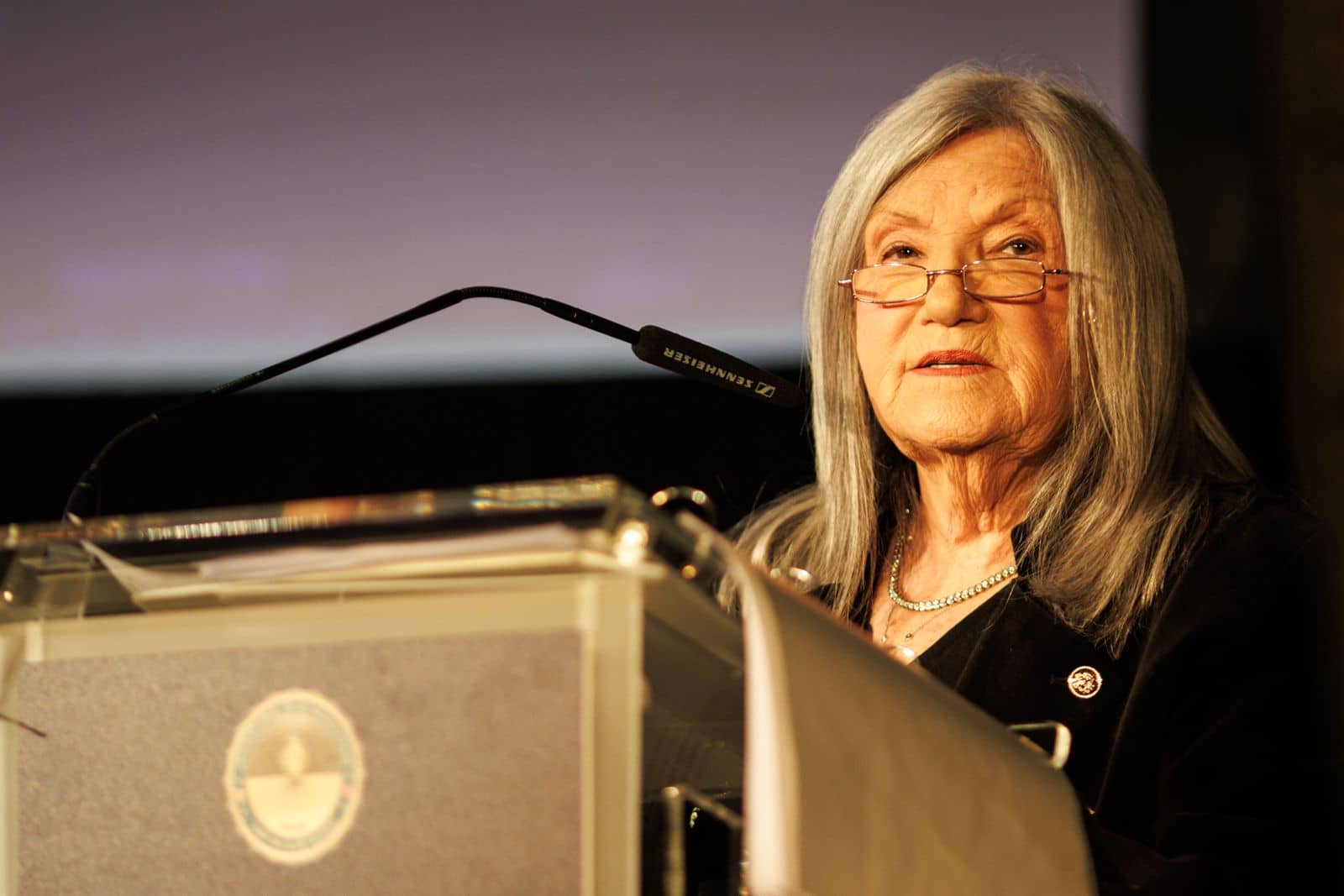
Phyllis Greenberg Heideman, President of the International March of the Living, spoke about what law enforcement leaders carry with them after walking through Auschwitz-Birkenau on the March of the Living, and why an attack on Jews is an attack on the rule of law. Her full remarks follow.
My name is Phyllis Greenberg Heideman and I am privileged to serve as President of the International March of the Living. It is an honor to stand before so many leaders and professionals who have dedicated their lives to protect the public, defend the rule of law and safeguard our communities.
As I stand before you tonight, I cannot help but think of my own ancestors and those of my husband, those who survived the evils of World War II and those who did not.
Stories like this, in your inbox
Survivor testimonies, history, and news from the March of the Living, once a month.
Sign upStories like this, in your inbox
Survivor testimonies, history, and news from the March of the Living, once a month.
Could they ever have imagined that over 80 years later I would be standing here in Berlin commemorating November Pogrom 1938 in a synagogue filled with German Police and their international colleagues?
I think not. I actually know not. What I do know, however, is how very grateful they would be to see how far we have come in our common search for meaningful survival.
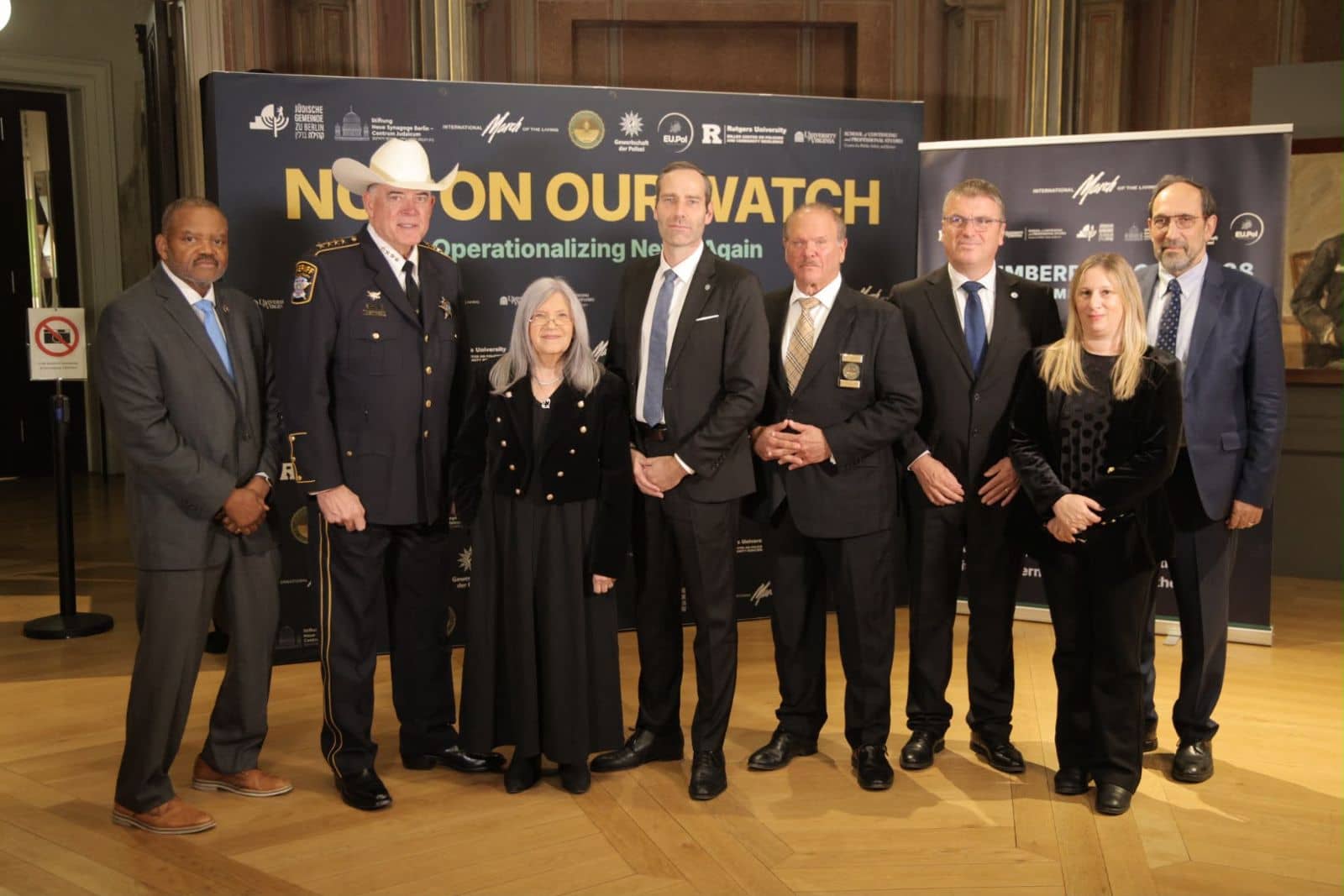
When I meet men and women from around the world who carry the responsibility of public safety, it is evidently clear that which unites you all is a simple but profound principle: democracy depends on those willing to protect it.
Tonight I want to speak about the threat challenging not only the Jewish community but the very foundation of society: Antisemitism.
History teaches us that when antisemitism rises, broader threats to public safety and democratic institutions are never far behind. The same extremist ideologies that target Jews also target other minorities, law enforcement officers, elected officials and the institutions that hold civil society together.
To be sure, the Holocaust did not begin with extermination camps. It began with words, conspiracy theories and with the normalization of hate. It began when too many people denied the reality around them. The progression from rhetoric to radicalization and from radicalization to violence is something every law enforcement professional in the world understands.
You see it firsthand. You investigate threats before they become attacks. You identify trends before they become tragedies. You stand between vulnerable communities and those who seek to do them harm.
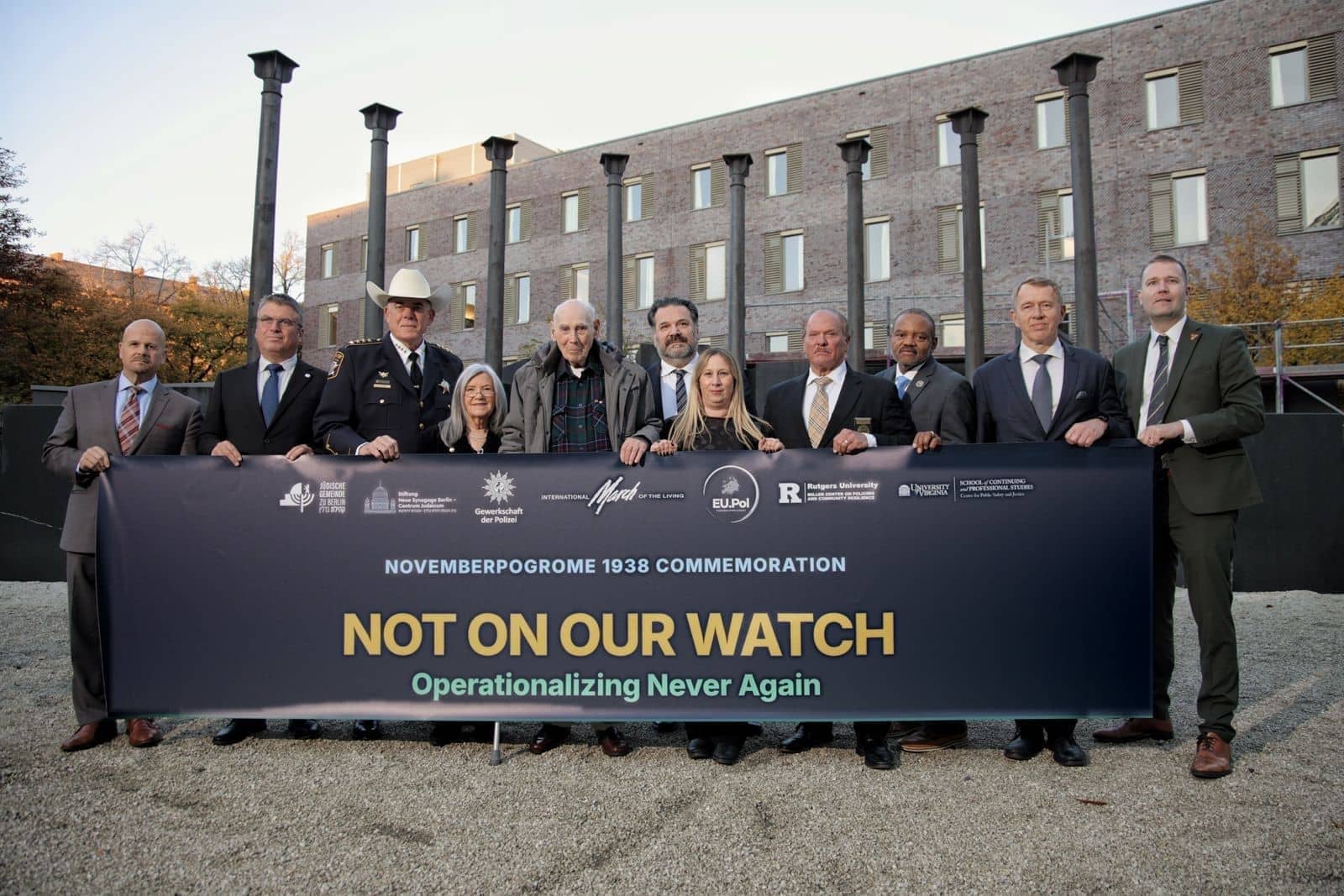
This is why your role in combating antisemitism is so very critical. You do not merely respond to incidents. You help preserve public trust, community confidence and societal stability. Each time a police officer protects a Jewish institution, a powerful message is sent forth: no citizen should live in fear because of who they are, how they pray or in what they believe.
Since 2017 we have had a working partnership with Rutgers University’s Miller Center on Policing and Community Resilience and for the past three years, the International March of the Living has welcomed law enforcement leaders from around the world to stand with us in unity. When these men and women walk through Auschwitz-Birkenau side by side with multi-generational delegations from diverse communities around the globe and become witnesses to truth and the potential of man’s inhumanity to man, they also witness the strength and hope our partnership represents. It is there they commit to refute a climate in which law enforcement was complicit, where laws were corrupted and where institutions failed to protect the individual. For those charged with enforcing the law, this lesson carries special significance.
The Holocaust reminds us that professional responsibility must always be grounded in moral responsibility. That the badge represents authority, but that it also represents accountability. It represents the obligation to protect the vulnerable, defend fundamental freedoms and uphold justice without fear or favor.
Today’s threatened environment makes this mission more important than ever. We know that countless attacks have been prevented because policing officials recognized warning signs and acted decisively. We know countless lives have been saved because dedicated public servants chose vigilance over complacency. For that, we are all profoundly grateful.
As we face the alarming rise in antisemitism worldwide, our message is clear and unequivocal: An attack on Jews is not only an attack on a minority community. It is an attack on the rule of law. It is an attack on pluralism and it is an attack on the values upon which free societies are built. When antisemitism is confronted professionally and with conviction, communities become safer.
The responsibility to work for a better tomorrow belongs to each of us today. Together, we can ensure that the lessons of the Holocaust are not confined to history books but serve as a living commitment to protect human dignity, defend democratic values and ensure that hatred never prevails.
Not On Our Watch · Berlin 2026
More from the Kristallnacht 1938 Commemoration
More stories you may find interesting